
Mom is struggling to keep up with the house, or perhaps Dad just received a new diagnosis that requires regular monitoring. You want them to stay at home, but as you start searching for help, you’re hit with a wave of confusing terminology. Home care, home health, skilled nursing, custodial care—it all starts to sound the same.
Choosing the wrong type of service isn’t just a minor administrative error. It can lead to dangerous gaps in care, unexpected medical bills that insurance won’t cover, and an enormous amount of stress for you as a family caregiver. You’re already exhausted; the last thing you need is the guilt of realizing your loved one isn’t getting the specific level of professional medical attention—or personal daily support—they actually require.
Take a deep breath. You don’t need to be an industry expert to make the right choice; you just need a clear map. This guide breaks down the essential differences between home care and home health care so you can stop second-guessing and start providing the best possible environment for your loved one to thrive.
At its heart, home care is about lifestyle support and safety. It is often referred to as non-medical care or custodial care. The primary goal is to help a senior remain independent in their own home by assisting with the tasks they can no longer manage alone.
Home care professionals, often called caregivers or home care aides, focus on the rhythm of daily life. They are the eyes and ears in the home when you can’t be there.
Their services typically include:
This service is ideal for seniors who are generally medically stable but are experiencing the natural decline that comes with aging. If your loved one is forgetting to eat, struggling with hygiene, or is at a high risk for falls, home care is the answer.
Home health care is significantly different because it is medical in nature. Think of it as an extension of the hospital or a doctor’s office brought directly to the living room. These services are typically “short-term” and aimed at treating a specific illness or injury.
Home health care is provided by licensed medical professionals. This isn’t just about helping with chores; it’s about clinical recovery and management.
Common home health services include:
This is for individuals who are recovering from a surgery, managing a complex chronic condition (like COPD or Congestive Heart Failure), or transitioning home from a hospital stay. It is almost always prescribed by a physician.
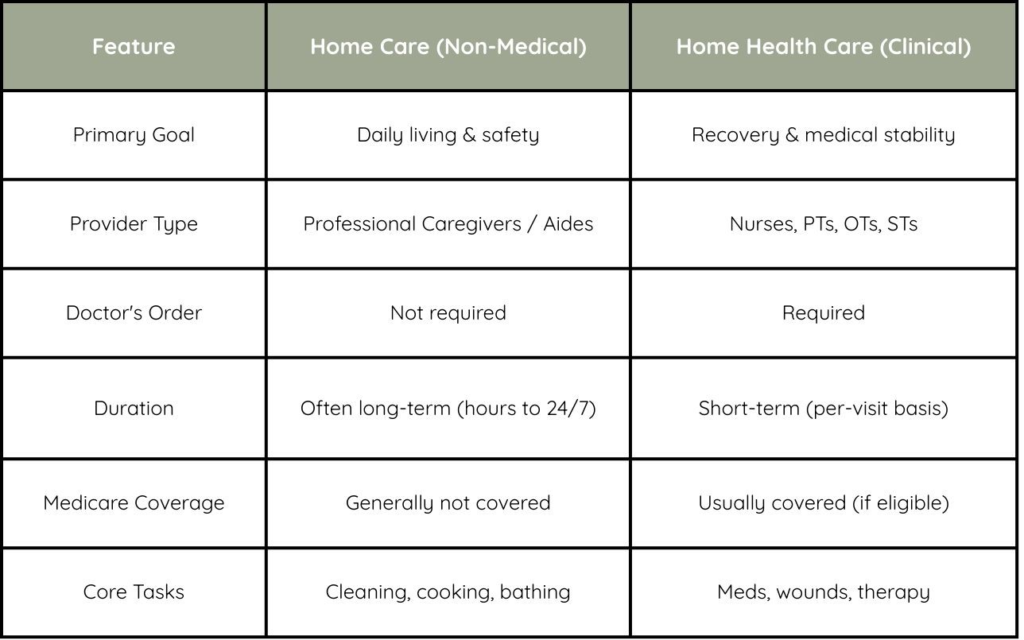
One of the biggest shocks for families is realizing how these services are funded. Understanding this early can save you thousands of dollars in “out-of-pocket” surprises.
Because it is a medical necessity, home health care is often covered by Medicare, Medicaid, or private health insurance. However, there are strict homebound requirements. The patient must be unable to leave the home without a great deal of effort, and the care must be intermittent—not 24/7.
Since home care is considered custodial, standard Medicare rarely pays for it. Families usually fund this through:
Many families find that a combination of both services is the most effective way to ensure a safe recovery.
The Scenario: Imagine your father just had knee surgery.
Dad still can’t stand up long enough to cook, he can’t get into the shower safely by himself, and he shouldn’t be left alone for 23 hours a day. This is where a Home Care Aide comes in. They fill the gaps that medical insurance doesn’t cover, providing the around-the-clock safety net that makes the medical treatment actually work.
If you are still on the fence, look for these red flags in your loved one’s daily life:
Before you sign a contract, do your due diligence. Whether you are looking for medical or non-medical help, ask these three questions:
Deciding how to care for an aging parent is one of the most emotional journeys you will ever take. By understanding that home health care treats the illness while home care supports the person, you can build a comprehensive plan that keeps your loved one safe, healthy, and—most importantly—where they want to be: at home.
Ready to find the perfect fit for your family? Don’t navigate this alone. Contact us today to schedule a free, no-obligation consultation. We will help you assess your loved one’s needs and create a customized care plan that offers you the peace of mind you deserve.