
We all share a common goal for our aging loved ones: we want them to stay in the homes they love for as long as possible. But as the years pass, the what ifs start to pile up. What if they fall while no one is there? What if they forget their life-sustaining medication, or simply start to feel the crushing weight of isolation?
This constant state of high alert is exhausting for families and can make seniors feel like they are losing their autonomy. It’s a painful tug-of-war between the desire for independence and the absolute necessity of safety.
The good news is that we are living in a golden age of innovation. Modern technology in home care is no longer just about clunky buttons around the neck; it is a sophisticated, invisible safety net. In this guide, we’ll explore how digital tools are restoring freedom to seniors and providing much-needed peace of mind to the families who care for them.
For decades, home care meant a physical person visiting for a set number of hours. While the human touch remains irreplaceable, it is now being augmented by a suite of tools that work 24/7.
The National Institute on Aging emphasizes that aging in place is the preferred choice for the vast majority of seniors. Technology is the bridge that makes this preference a sustainable reality.
By integrating smart devices and remote monitoring, we are moving from a reactive model of care—waiting for an emergency to happen—to a proactive model that identifies risks before they become crises.
The most visible shift in technology in home care is the rise of sophisticated wearables. These aren’t just for counting steps anymore; they are clinical-grade tools that live on the wrist.
Modern smartwatches can now track heart rate variability, blood oxygen levels, and even perform an ECG. For a senior managing a chronic condition like COPD or arrhythmia, this data is invaluable.
One of the greatest fears in senior care is the long lie—a fall that goes undetected for hours. Many modern wearables use accelerometers and AI to detect the specific motion of a fall. If the wearer doesn’t move or dismiss the alert, the device automatically contacts emergency services or family members.
Forgetfulness is a natural part of aging, but missing heart or blood pressure medication can be dangerous. Wearables can vibrate and display clear text prompts, ensuring that medication management stays on track without the need for constant hovering from a caregiver.
If wearables are the scouts of home care, smart home technology is the infrastructure. A truly smart senior home uses a network of devices to ensure the environment is safe and responsive.
Devices like Amazon Alexa or Google Home are game-changers for seniors with mobility or vision issues. Voice commands allow them to:
Unlike cameras, which many seniors find intrusive, motion and contact sensors provide privacy while maintaining safety. These sensors can be placed on the fridge, the bed, or the bathroom door. If the normal routine isn’t detected—for example, if the fridge isn’t opened by 10:00 AM—an alert is sent to the caregiver.
Falls often happen in the dark. Smart lighting can be programmed to turn on automatically when a senior steps out of bed at night, illuminating the path to the bathroom. Additionally, smart stoves can auto-shutoff if left unattended, preventing potential house fires.
The physical toll of traveling to a doctor’s office can be a significant barrier to care. Telehealth services have revolutionized this aspect of the senior experience.
According to Mayo Clinic, telehealth offers a way to manage chronic conditions more effectively through remote patient monitoring. Instead of a high-stress trip to the clinic, a senior can have a video consultation with their specialist from their favorite armchair.
This technology allows for:
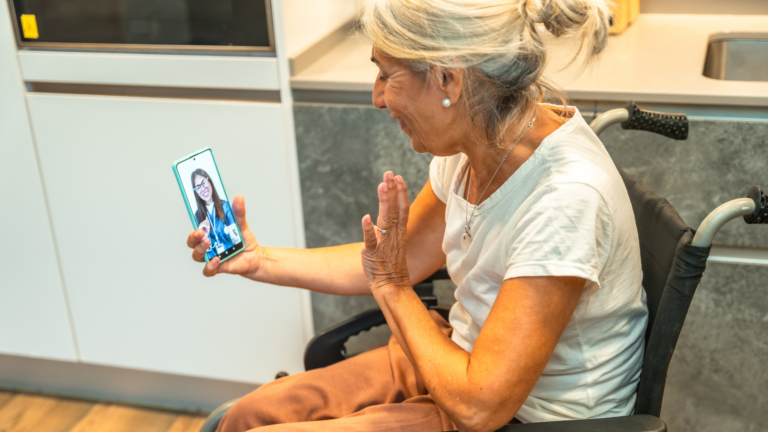
Loneliness is a silent epidemic among the elderly, with health risks comparable to smoking 15 cigarettes a day. Technology is the primary weapon against this social isolation.
We cannot talk about technology in home care without mentioning the sandwich generation of caregivers. Technology acts as a force multiplier for those caring for aging parents while working full-time.
Care coordination apps allow family members to see a real-time log of when a professional caregiver arrived, what they ate, and how their mood was. This transparency builds trust and reduces the mental load of wondering how Mom or Dad is doing.
Expert Tip: Technology should never replace human interaction. Instead, use it to handle the tasks of caregiving so that when you visit, you can focus on being a son, daughter, or friend.
With thousands of gadgets on the market, it’s easy to feel overwhelmed. As an expert in this field, I recommend a four-step assessment:
Don’t buy tech for tech’s sake. If your loved one is a wanderer due to dementia, GPS tracking is a priority. If they are cognitively sharp but physically frail, voice-activated home controls are the better investment.
The best technology is the one that actually gets used. Look for senior-friendly designs:
Ensure that the devices talk to each other. A fall detection pendant that integrates with the smart lights to turn them on during an emergency is far more effective than two standalone devices.
Tech doesn’t set it and forget it. Batteries need charging, and software needs updating. Designate a tech lead in the family (often a grandchild is happy to help!) to do a monthly system check.
As we look toward the future, we see the emergence of AI-driven predictive analytics. Soon, home care systems will be able to predict a fall days before it happens by analyzing subtle changes in a senior’s gait or sleep patterns.
This isn’t science fiction; it is the natural evolution of our commitment to helping seniors live with dignity and safety.
Integrating technology into a home care plan can feel like a daunting task, but you don’t have to do it alone. Whether you are looking for a simple medical alert or a fully integrated smart home, the right tools can change your life—and theirs.